Remembering Sasha
Nadia’s book came out last month. The five copies I’d pre-ordered arrived in a neatly packed box, Sasha looking up at me from the photo on the book jacket when I opened it up.
Sasha was my college roommate. She died of an accidental fentanyl overdose in 2015, the year that we both would have turned 45. Her younger sister Nadia wrote a book about it, “Dear Dealer.”
Sasha and Nadia weren’t twins – they were three years apart – but I always thought of Nadia as “the strong twin” anyway. It was like she had gotten all the armor that should have been divided between the two of them. There was no boundary between Sasha’s heart and the outside world.
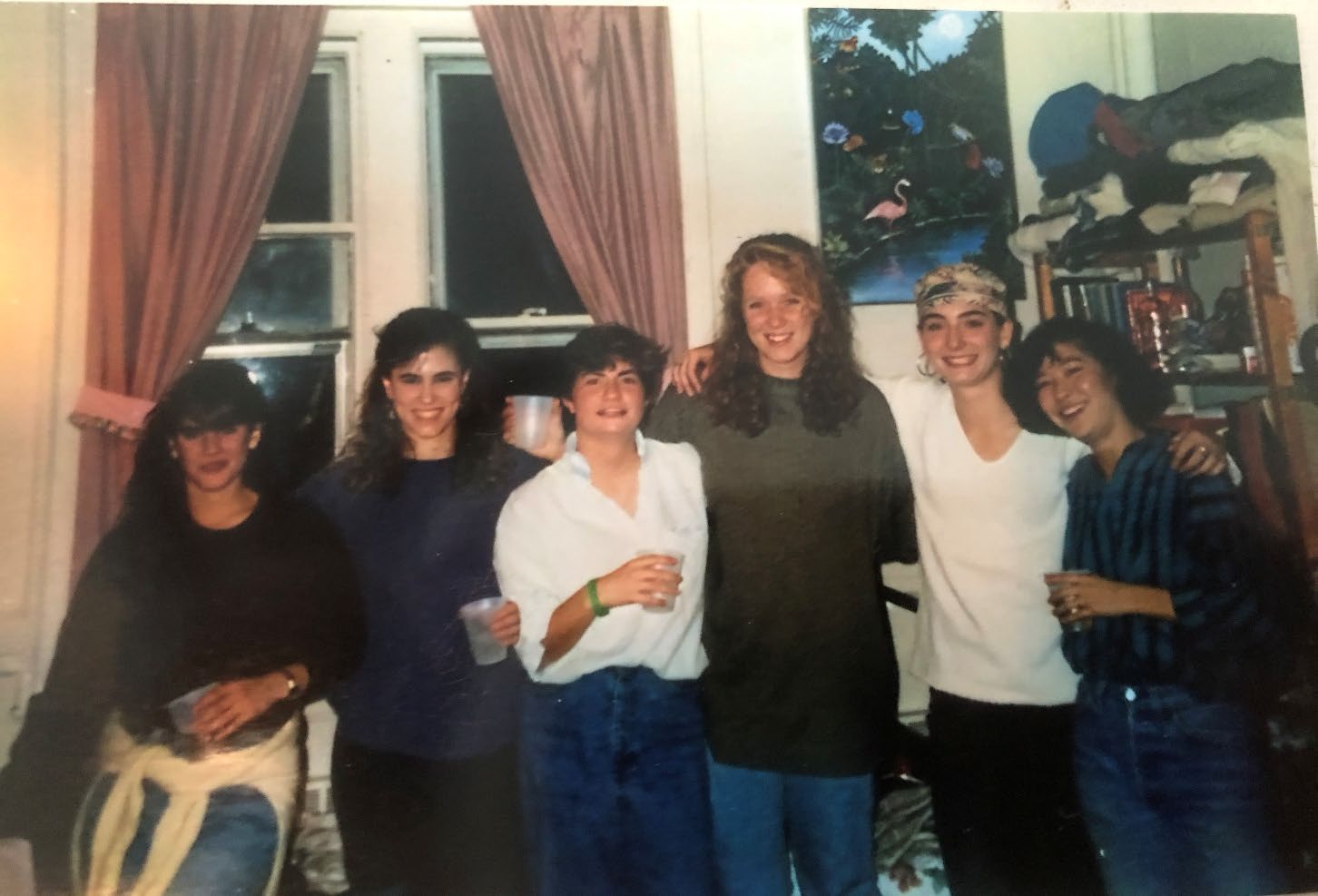
I met Sasha when I was 17, a freshman at Yale. It was 1988. We lived together in a suite of six girls and we were immediately a pack. Early in our college careers, a snarky classmate referred to us as “beer pigs.” We thought the name so hilarious that we immediately took it on as our own, along with a motto we had seen on a box of cookies, “Ugly But Nice.”
Sasha was from Branford, Connecticut, a town on Long Island Sound not far from New Haven. Because her family lived close by, we saw a lot of her parents and Nadia, who would often visit us. Sasha was so proud, and so protective, of her younger sister. We roommates all thought of Nadia as “our” little sister. Long after we graduated, when we would all get together, Sasha would proudly enumerate Nadia’s latest achievements. Nadia got into Dartmouth! Nadia is at NYU for acting! Nadia is in a show! Nadia is marrying a movie star! Nadia was beautiful and glamorous. She seemed to sail into early adulthood with an ease that eluded Sasha. A different sort of person might have been jealous of her little sister. Not Sasha.
Sasha was naturally cool. She was outrageous, creative, and hilariously funny. I was not especially cool in college. We were, after all, at Yale. Most of us had been awkward and dorky in high school, grateful for the opportunity to remake ourselves in college. But it seemed like Sasha had always been cool – confident and self-assured. I wasn’t either of those things but could fake it when I was with Sasha. She was bold. When she found me insufficiently adventurous, she would berate me. “Come on Val,” she would say. “Don’t be such a pussy!”
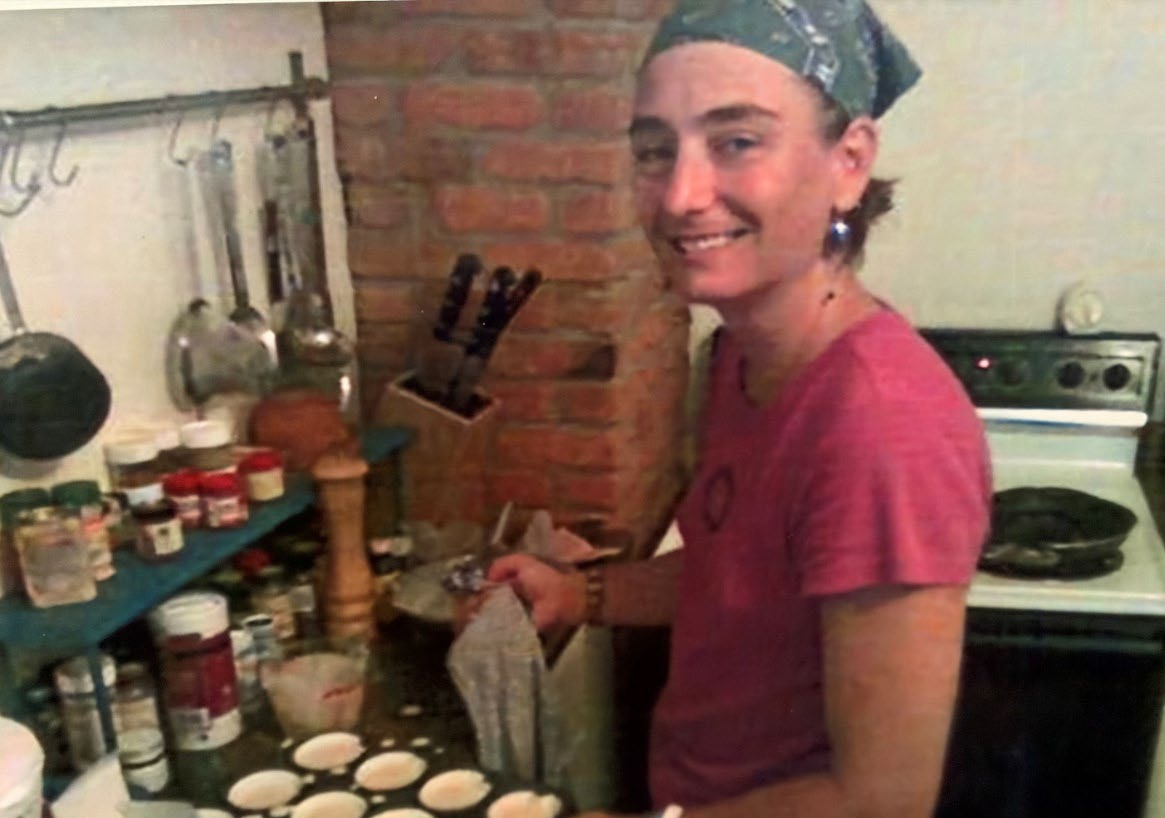
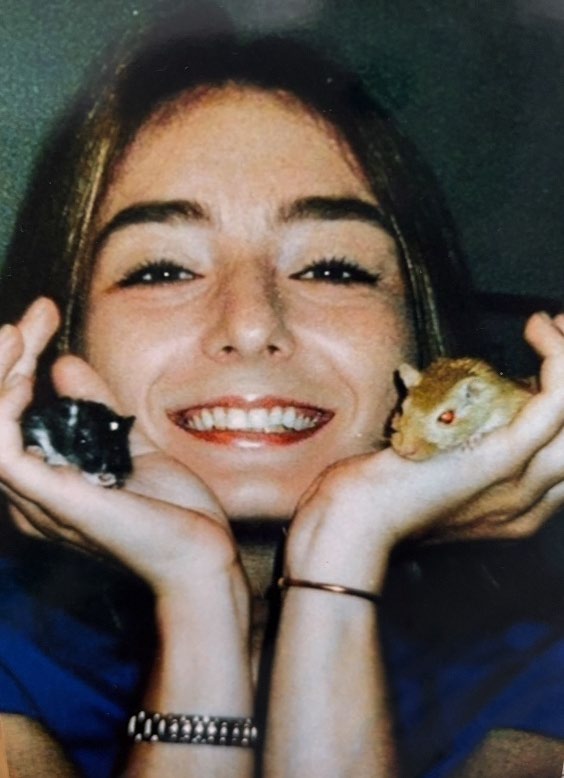
She was brilliant, and so kind. She loved animals – horses, cats, hamsters. She had a pet rat named Nickademas whom she would walk in the college courtyard on a ferret leash. (Wherever she is now, I know that she is tending to all the small creatures, hugging them too hard and feeding them people snacks.) She was an amazing chef and could make delicious things in a dorm room microwave. She introduced us to something called a Sandwich Master. We would make weekend trips to the nearby CostCo to buy foot-long loaves of white bread and sleeves of bright yellow “cheese” that she would melt into sandwiches for late night binges, our own personal line cook.
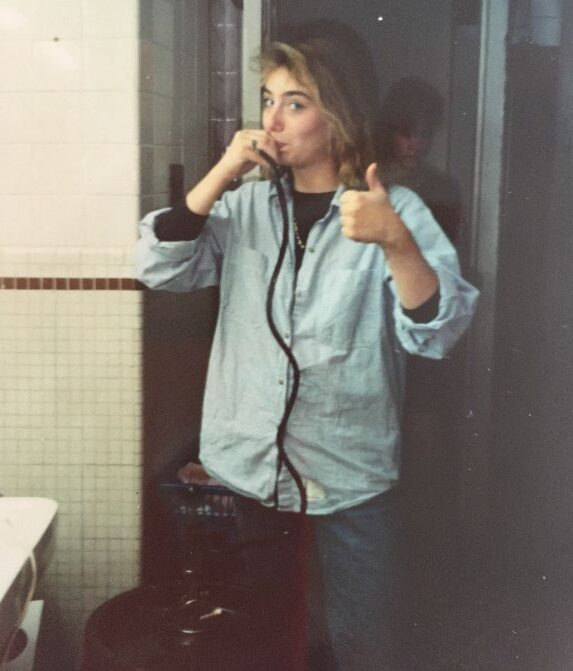
Invariably, Sasha was the life of the party. For most of our college years, the fun was really pretty innocent – frat parties, kegs smuggled into dorm rooms, that sort of thing. I remember that she once pushed me home from a party in a shopping cart we had stolen from Shaw’s Supermarket. She was better at Tang, a traditional Yale drinking game, than even any of the boys. When I turned 18 our freshman year, she hired a male stripper dressed in leather chaps to perform shirtless for me, “HAPPY BIRTHDAY VAL!!” emblazoned in marker across his chest.
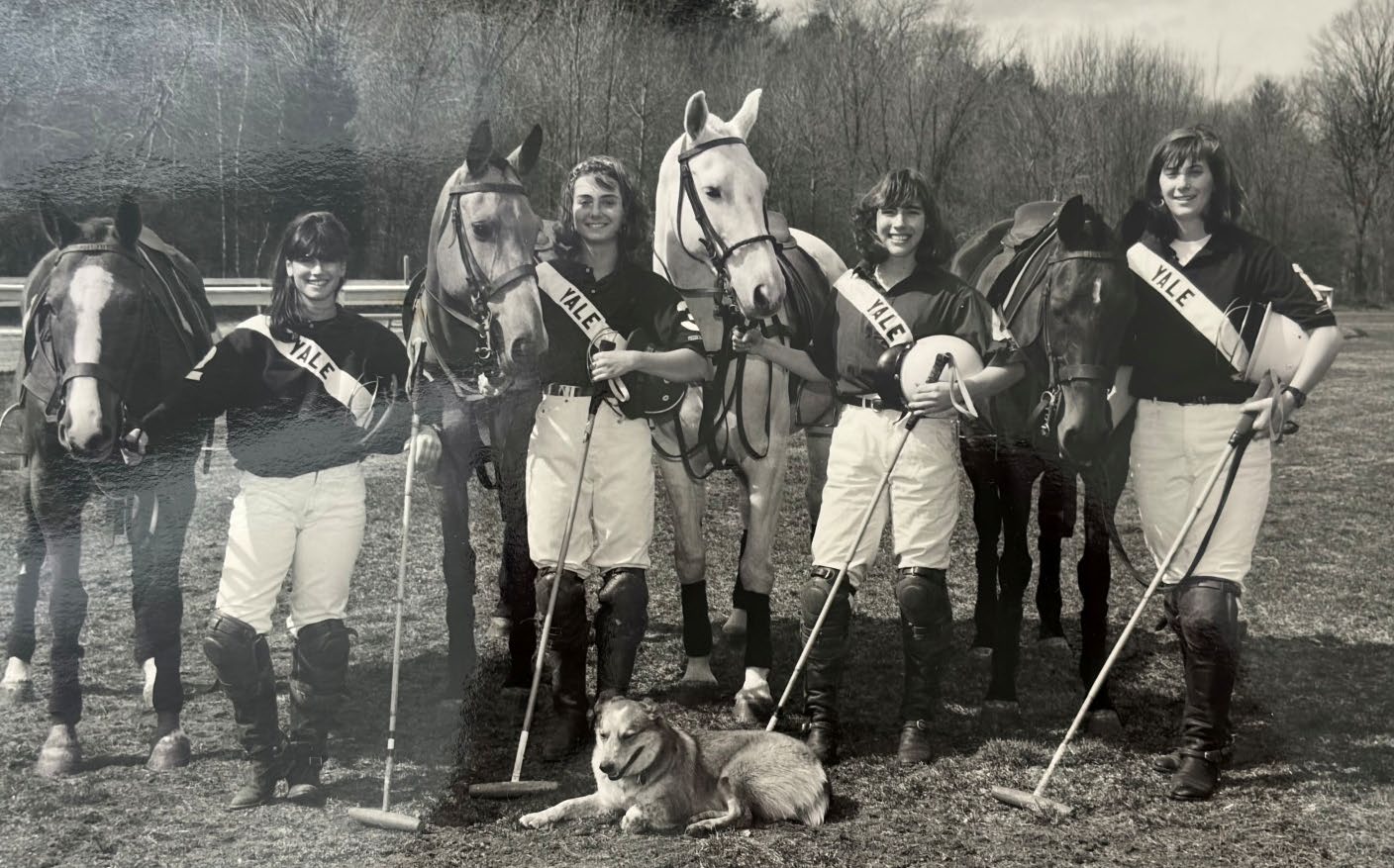
Sasha and I played on the Yale women’s polo team – or rather, Sasha played and I mostly tried to stay out of the way. She was a terrific polo player. I contributed very little, maybe scoring five goals in my entire college career. But every time I missed, Sasha would shout out with real gusto, “Good try, Val! You will get it next time!” She meant it. She even believed it! That was Sasha.
Then came the moment when the partying started to feel a little dark. When Sasha had arrived as a freshman at Yale with a bong and a roach clip, it seemed more like it was about her deadhead, hippie-type persona than any real issue with drugs. By senior year, it had become apparent that that was not the case. Her drug use began to create an uneasy distance between us. That year, we lived in adjacent singles connected by an interior door, but we kept it closed. When we and our classmates made the traditional spring trip down to Myrtle Beach for the week between the end of classes and graduation, someone said that Sasha had been seen dropping acid on the beach.
We graduated and scattered. I went back to New York, homing pigeon that I am. Sasha moved to Michigan, following a boyfriend who wasn’t good for her, but also enrolling in grad school at the University of Michigan, which was. Our twenties rolled by and the roommates all gathered periodically, – for birthdays, mostly. The first time I thought that Sasha might be in trouble, I was sitting across from her at a group dinner, celebrating someone’s thirtieth. She kept nodding off, sometimes mid-sentence. I didn’t know enough about drugs at the time to know that it was a drug thing, but Leslie, the roommate who had stayed most connected to Sasha, caught my eye and gave me a look.
More time passed. Most of us settled into careers and semi-adult lives and relationships and family. Not Sasha. It seemed clear that she had stalled out somehow. There were more bad boyfriends and too many jobs. She lost her looks. It seemed that she had also lost her way.
In 2007, we heard that Sasha’s father had passed away – cancer. Both of Sasha’s parents were doctors but somehow it was always “Dr. Bowers and Mrs. Bowers.” Maybe we thought the “Doctors Bowers” would be too confusing. We made plans to attend the funeral and reminisced about some of our favorite memories from college. Every Easter, the Bowers would invite us for brunch at their fancy country club in Branford. Easter falling on a Sunday and Sunday falling after a Saturday, we always arrived fresh from a night out, hung over and disheveled. Sasha’s mother humored us (“oh, girls”). Her father, who we all adored, tried to act stern but we were only a little afraid of him.
We made plans to gather at the Bowers’ home in Branford to go to the funeral service together. Two of us were travelling up from New York, two down from Boston, and one was already in New Haven. When we arrived at the house, Sasha wasn’t ready to go, as we had expected. We found her upstairs, in her childhood bedroom, in a stupor – barely clothed, limp, and so high that she could only mumble. She was too high to go to the funeral. We couldn’t even really wake her up. She had marks on her arms. I had never seen an addict before.
Sasha loved her father. She loved him so much that the word “love” doesn’t even seem to capture the connection that was between them. Apparently, she just could not cope. Someone said she had been stealing and taking her father’s pain meds in his final weeks of life.
We went to the funeral without her. Nadia spoke – poised, beautiful, poetic. She told a story about her father, how he’d needed to borrow her car for a few weeks while his was in the shop. Her car key was on a keychain that read, “Hot bitches drive red cars.” She described him moving through his days, the distinguished Dr. Bowers – reserved, movie-star handsome, respected – walking around with that keychain, cosigning the truism about hot bitches and red cars. She made us laugh. Nadia, it seems, is good at eulogies.
After the funeral, we went to a coffee shop in Branford. We sat around in an awkward circle, looking at each other, unable to process what had happened to Sasha. I remember that one of the roommates, Sonya, was nursing her daughter, rocking her. Leslie, our roommate who had stayed local to New Haven, had known for a while that Sasha was in real trouble. The rest of us were stunned, almost speechless. We talked about what we could do, how we could help. Should we stage an intervention? The family, it seemed, was already doing everything that could be done.
I remember where I was when I got the call that Sasha had died – how the air felt and how the light looked and what the sounds were like around me. I was getting out of my car on a summer day in Millerton, New York, walking into Irving Farm, desperate for an iced coffee. My phone rang and I saw the name light up on the caller ID, “Lemert, Leslie.” I just knew. I picked up and said “no” before Leslie could speak. She replied, “Oh, Val.” That was the entire conversation.
After Nadia’s book came out, my social media feed was flooded with pictures of Sasha, and of Nadia, and of Sasha and Nadia together – reels of the two of them, set to music, riding merry go rounds as children and dressing up for Halloween as teenagers in what seemed like a perfect coastal childhood. I love that so many people know Sasha now. And I love that Nadia wrote this book. RIP, Sasha. You are missed, loved, remembered.